
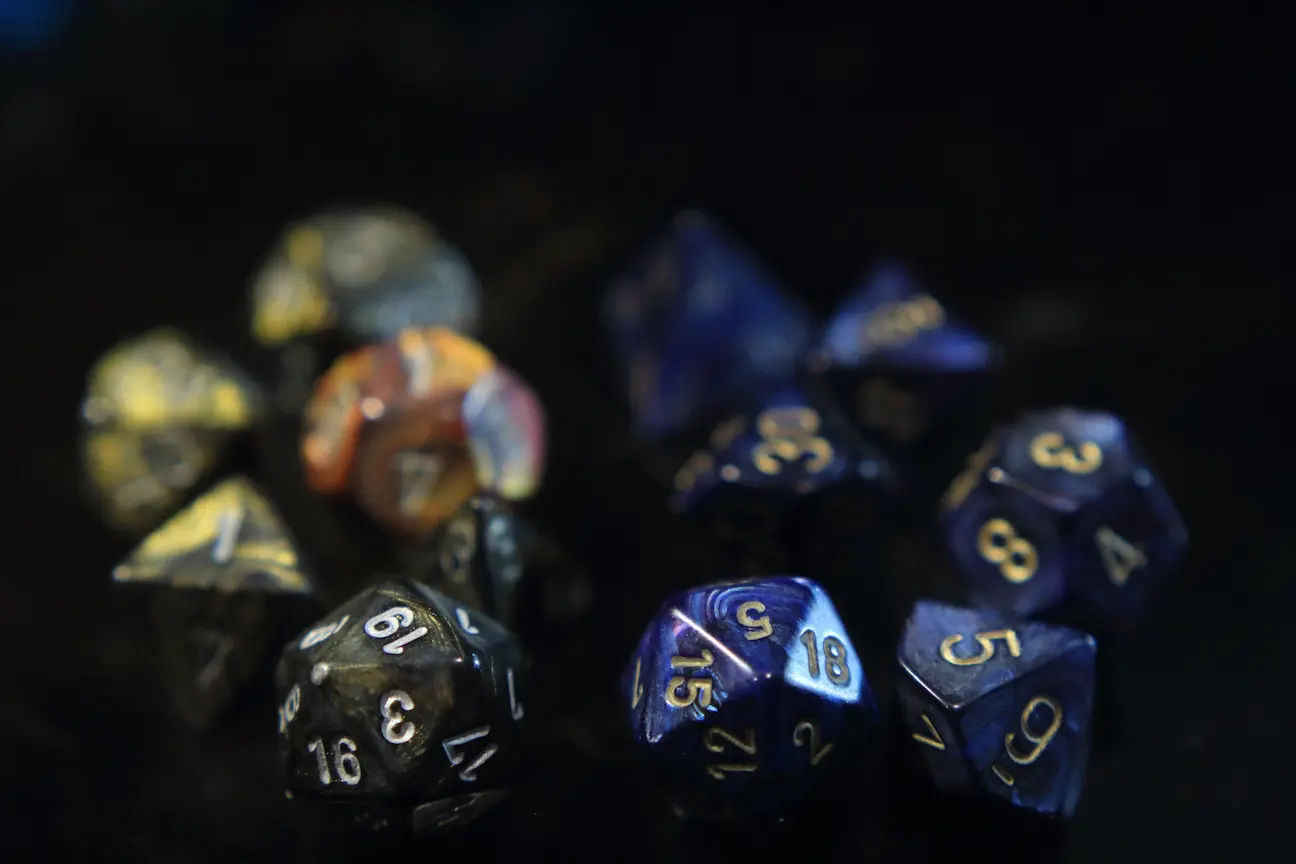
Polyhedral dice are the core of Dungeons & Dragons (D&D). They are not just gaming tools but symbols representing the magic and unpredictability of fantasy adventures. If you’ve always wanted to know how polyhedral dice work and what they are used for, this guide will take you through everything you need to know about these essential tools for every D&D session.
D&D Polyhedral Dice: What Are They and What Are They Used For?
A D&D polyhedral dice set consists of seven main dice, each with a different number of sides:
- d4: Four-sided die, often used for damage or healing.
- d6: The classic cube-shaped die, ideal for weapons or spells.
- d8: Used for melee weapons and various effects.
- d10 and d100: Used for probabilities or damage calculations.
- d12: Often used for heavy weapons.
- d20: The most iconic die, used for skill checks, attacks, and saving throws.
What Are Polyhedral Dice Used For?
Each die represents a specific game mechanic, such as combat, skill checks, or environmental interactions. For example:
- The d20 determines the success or failure of an action.
- The d4 or d8 calculates weapon damage.
- The d100 helps determine random probabilities.
The variety of dice shapes and numbers makes it easy to represent different aspects of the game in a simple and intuitive way.
If you’re looking for a complete starter set, the Basic Polyhedral Dice Set from Dice Lair is an excellent choice.
How to Use Polyhedral Dice?
Polyhedral dice are at the heart of Dungeons & Dragons gameplay, and rolling dice correctly ensures that every action is fair and consistent. While rolling a die may seem simple, understanding the rules and mechanics takes some practice.
Step-by-Step Guide to Rolling Dice
1. Identify the Die Required for the Action
Each action in D&D requires a specific die. For example:
- d20: Used for attacks, skill checks, and saving throws.
- d8: Commonly used for damage rolls for many weapons and spells.
- d4: Often used for healing spells or small effects.
Make sure to choose the right die for your action, and consult the Dungeon Master or the rules if you’re unsure.
2. Roll the Die on a Suitable Surface
To ensure a fair result, dice should be rolled on a flat, even surface. Some players prefer to use a dice mat or a wooden dice tower for greater precision and elegance.
- A dice tower not only enhances the table aesthetic but also ensures fair rolls and prevents disputes.
3. Read the Result and Apply Modifiers
After rolling, check the number and add any relevant modifiers.
For example:
- A longsword attack may require adding Strength bonus to the d20 roll.
- A spellcasting roll may add a Wisdom or Charisma modifier, depending on the character class.
4. Understanding the Results: Successes and Failures
D&D is a narrative game, and every dice roll can lead to epic or disastrous moments. The results are not just numbers—they help bring the story to life.
- Natural 20 (Critical Success): Rolling a 20 on a d20 means the action is performed spectacularly. In combat, this doubles damage, making it a devastating hit.
- Natural 1 (Critical Failure): Rolling a 1 on a d20 results in a catastrophic failure, often leading to unexpected consequences such as falling into a trap or accidentally hitting an ally.
Even failures, however, can make the story more exciting!
When to Use Each Polyhedral Die?
Each polyhedral die has a specific role in the game. Understanding when to use them is essential for smooth gameplay.
- d20: The most frequently used die, determining whether attacks hit, skill checks succeed, and saving throws are passed.
- d4, d6, d8, d12: These dice are mainly used for calculating damage from weapons and spells.
- d6: Used for weapons like short swords or elemental spells.
- d8: Common for longbows or healing spells.
- d12: Reserved for powerful attacks, such as those from a great axe.
- d10 and d100: Used for special effects and probabilities.
- The d100 can determine the outcome of a random event or a low-chance action.
To better understand each die’s role, consult D&D rulebooks, which explain mechanics in detail.
Types and Designs of Polyhedral Dice
Polyhedral dice are not just functional—they also reflect the player’s personality and character style. Common types include:
- Resin Dice: Available in vibrant designs, such as stuffed dice with glitter or miniatures inside.
- Metal Dice: Example: Dragon-themed metal dice, perfect for players who want a touch of elegance and weighty rolls.
- Transparent Dice: Great for those who love a minimalist and refined look.
- Custom Engraved Dice: Featuring unique engravings that match campaign themes or character traits.
Each dice set adds an extra level of immersion, turning every roll into a special moment. Explore custom polyhedral dice for an even more engaging experience.
Must-Have Accessories for Polyhedral Dice
Besides dice themselves, essential accessories enhance the gaming experience:
- Dice Bags – Example: Leather Dice Pouch for safe storage and easy transport.
- Dice Trays – Protect your table and keep rolls consistent.
- Complete Dice Sets with Dice Towers – Combine style and functionality in a single product.
Why Choose Dice Lair Polyhedral Dice?
Dice Lair offers a wide selection of polyhedral dice sets for every playstyle. From resin to metal, each set is crafted with high-quality materials and attention to detail.
With Dice Lair, you can find dice that not only enhance gameplay but also reflect your passion for the D&D universe. Explore the full collection of Dice Lair polyhedral dice and take your game to the next level.
Final Thoughts: Polyhedral Dice in D&D
D&D polyhedral dice are more than just gaming tools—they are the soul of fantasy adventures, turning every roll into an epic moment. Knowing how to use them and selecting the right set not only enhances the game but also adds a personal touch to every session.
Whether you’re a veteran or a beginner, investing in a high-quality polyhedral dice set and its accessories will elevate your gaming experience.
Take a look at Dice Lair’s products and find the perfect dice set for you!